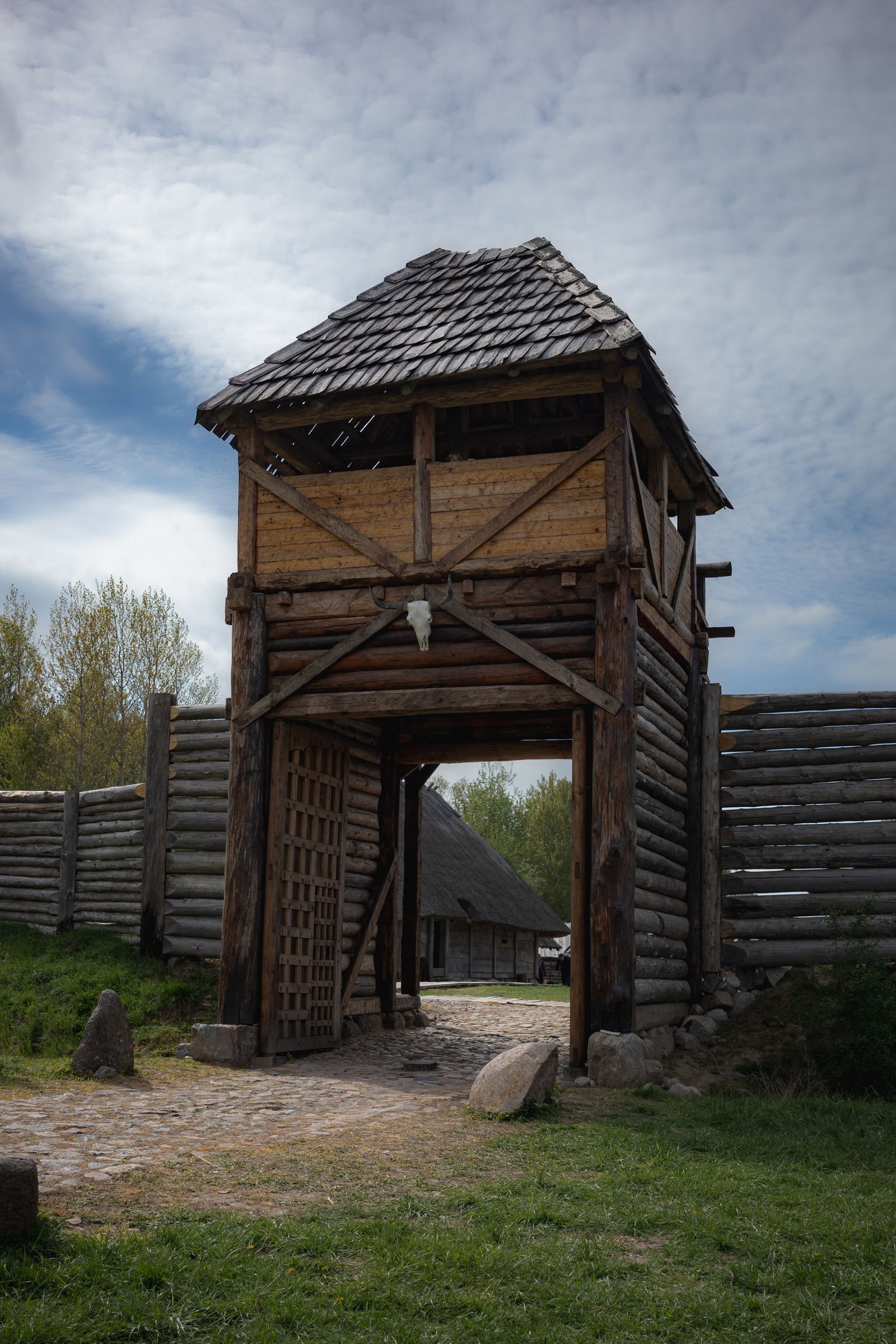
Every piece of software you run your business on is a trojan horse. It arrived as a gift: free scheduling, easy invoicing, a storefront, a map of your customers. You rolled it inside the walls because it was useful, and it was. What it carried inside was a quieter thing: the slow transfer of your relationships, your records, and your margins to somebody else’s balance sheet. Nobody lied to you. The tool really did work. That’s what made it a good horse.
The newest horse is the biggest one yet. An AI that will run your whole back office for you — answer your customers, draft your contracts, schedule your crews, chase your invoices — from a data center you will never see, owned by a company that will soon know more about your business than you do. It will be a wonderful tool. That’s exactly what makes it a good horse.
I want to talk about building the same horse pointed the other way. Just as useful. Just as easy to let in. Carrying your independence instead of someone else’s leverage. It only works if you let it in. And it only works if, when the belly opens, you’re ready to walk out with what’s inside.
You are not watched from the sky

Start with the fear most people name first: the drone, the satellite, the camera on the pole. It feels like the frontier of surveillance, and it’s the part you can do the least about. You can’t stop someone else’s drone from photographing your roof.
Here’s the thing: don’t bother trying. A photograph of a roof is nearly worthless. So is a license plate, a storefront, a truck in a driveway. These are fragments. They become surveillance only when something joins them together — a photo to a customer list, a customer list to a route, a route to a schedule, a schedule to a payment. The join is where the power is, and the join doesn’t happen in the sky.
It happens in your back office. Your software knows who your customers are, when you’ll be at their house, what they owe you, which supplier you use and what you pay. Whoever holds that holds the keys that turn a pile of fragments into a map of your life. Small businesses aren’t surveilled from above. They’re surveilled from inside the tools they trusted.
That reframes the whole problem. The question isn’t how to hide from the drone. It’s where your back office lives, who can read it, and what happens the day someone is ordered to hand it over.
A boundary is a fact, not a setting
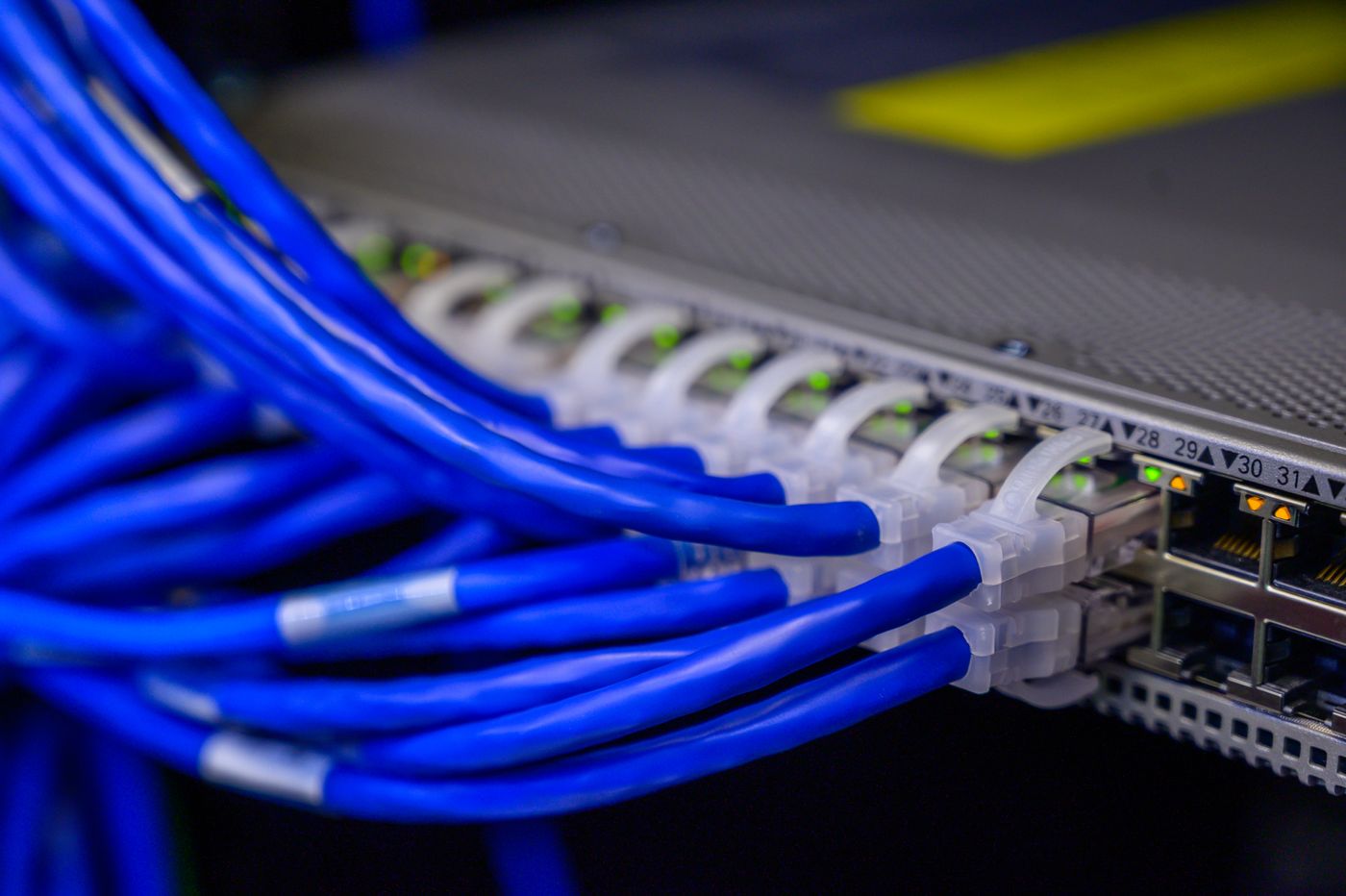
When people talk about protecting a network, they usually mean configuration: permissions, policies, encryption toggles, a privacy page that says the right words. All of these share one flaw. A setting is something an attacker edits. A policy is something a new owner rewrites. A promise is something a subpoena overrides.
A real boundary is a physical property of the world. The cable that doesn’t exist can’t carry a command back. The radio that was never installed can’t be reached. The machine in your own building, on your own power, holding your own records, doesn’t need anyone’s permission to keep working when the cloud goes dark, and it can’t be searched from a server farm three states away. These protections are inconvenient. They’re also the only kind with an inspectable failure mode: you can walk over and see whether the plug is in.
So the first principle of what we’re building is local-first. The intelligence, including the AI, runs where you are. The records stay where you are. The thing in the cloud, if there is one, is a relay, not a warehouse. That isn’t a feature we’ll add later. It’s the posture from day one, because convenience always wins by default unless the rules forbid it.
And a warning about what doesn’t count. Encryption alone is not a boundary. Access controls are not a boundary. “We don’t log that” is not a boundary. “We’d fight the request” is not a boundary. Anyone selling you those as protection is selling you a promise, and the whole point of this project is that promises don’t hold.
Property means the machinery, not the filing cabinet
Most platforms now offer “data portability.” It sounds like a right. In practice it means that when you leave, you get a zip file. Your records, your exports, a filing cabinet’s worth of the past. What you don’t get is a running business, because the thing that ran it — the rules, the contracts, the logic, the connections — stays behind.
Real ownership of your affairs means the opposite. You should be able to walk out with the whole machine: every rule written in plain language you can read, every contract you can inspect, no secret clauses, and the ability to keep running on your own premises tomorrow morning as if nothing had happened. Liberty that depends on a vendor’s continued goodwill isn’t liberty. It’s a lease.
This is what parity with the extractors actually means. It was never about having more computing power than a large corporation. It’s about not being their raw material. A business that holds its own records, runs its own logic, and signs its own contracts on terms it can read has stopped being a product. Nothing more is required.
The clerk on your side

The headline capability of AI isn’t that it writes emails. It’s that it can take what you mean and turn it into a specification.
You describe a deal the way you’d describe it to a friend: what you’ll do, when, for how much, what happens if the weather turns. What comes back is precise, complete, and written in language you can read, with the terms that were implied made explicit, the case nobody mentioned covered, and every conflict with something you already agreed to flagged before you sign. It has read your whole history. It knows the commitment you made last Tuesday that this one would break. It does the due diligence a good lawyer and a good bookkeeper would do, on every agreement, every time, without the bill.
This is the capability SQUEIL is built around, and it’s the part I’ll describe least. What I can say is how it feels from your side: you speak in intent, it answers in specification, and nothing becomes binding until you’ve read it and said so. The machine proposes. You ratify. That order never reverses.
Two things follow. First, this is what actually shrinks the paperwork state. Most administrative overhead — filings, disputes, licenses, the lawyers on both sides — exists because specification is expensive and usually done badly. Ambiguity at signing is where the cost lives. When every small business has a tireless clerk that specifies precisely and checks against the record, the ambiguity that feeds courts and regulators shrinks at the source.
Second, the clerk that holds all your agreements is the single most dangerous thing to keep in someone else’s building. It knows everything. That’s the whole point of it. Which is exactly why it has to run on your premises, under your boundary, or the horse is pointed the wrong way again.
The platform that can’t betray you
Every platform that later turned extractive started with good intentions and a promise. The promise was real when it was made. It dissolved for a boring reason: by the time anyone could have handed the power back, there were investors, employees, and partners whose livelihoods depended on not doing so. Asking people to vote to dismantle the thing that pays them isn’t a governance mechanism. It’s a hope.
So we’re not making that promise. We’re designing so it never has to be made. The target is a platform that loses the ability to betray you by construction, not one that keeps the ability and pledges not to use it. That’s the thesis behind SQUEIL Ops, and it’s the part I can describe without opening the hood.
The platform is meant to be thin. It holds the agreements and the means to settle disputes about them. It does not hold your data and it does not do your computing. What we would see is rolled up: how many jobs the network ran that month, where it’s growing, what a healthy business in your trade looks like on average. What we can’t see is you. Your customers, your contracts, your schedule never leave your building in a form anyone upstream can read. And because nothing dangerous is held centrally, there’s nothing dangerous to seize, sell, or leak if the company that built it disappears tomorrow.
Your consent expires unless you renew it. The capability you gain is yours to carry away. The default direction of the whole system, if everyone simply stops paying attention, is toward dissolution: the center fades unless the edges keep choosing it. That’s the sunset, built in, with no vote required and no founder’s goodwill to rely on.
Civic accountability in a new world
A constitution can’t make people good. No charter has ever produced love, honesty, or grace, and any project that depends on those from its participants will fail the first time real money arrives.
What a well-built system can do is bound the cost of betrayal. It can make exit cheap enough that people actually take it. It can make the rules public enough that nobody needs to trust the people in charge, only to be able to read what they wrote. Accountability in this world doesn’t come from electing the right stewards. It comes from the fact that every participant can leave with everything they own, on a day’s notice, and the stewards know it.
That slowly changes what we need from the institutions above us. A great deal of the administrative state exists because trust between strangers is expensive: we need courts because enforcement is hard, licenses because verification is hard, complex filings because records are fragmented. When contracts are unambiguous at signing because the clerk on your side specified them, records are clean at the source, and a business’s track record is verifiable directly, the volume of disputes and paperwork that needs a central authority drops. Governments that adapt get easier compliance and less evasion. Governments that don’t will try to mandate a central relay they can query, and the answer to that is a business that can produce any report the law requires from its own premises, with no surveillance point needing to exist in between.
Let me be plain about what doesn’t change. Force doesn’t go away. A network like this doesn’t make coercion impossible; it makes it expensive, because there’s no central point to compel, no master list to seize, no single switch to flip. The cost of control goes up. The cost of exit goes down. That isn’t a revolution. It’s a gradual shift in what people actually need from central institutions, and over a generation, that kind of shift is the only kind that has ever held.
The roadmap
Here’s how we get there, at the altitude I can share.
A tool you’d use anyway. First it has to earn its place on its own merits: scheduling, contracts, customers, payments, done well, running on your own hardware. If it isn’t better than the extractive version at the job you actually have, nothing else matters. This is possible now for a reason it wasn’t five years ago: the administrative weight that pushed small businesses into platforms is exactly the kind of work a capable model can do on a machine in your own office. The same AI that threatens to be the ultimate extractive tool is the first thing that lets one person run their own affairs at scale.
Implementors carry it to the many. Local partners, the people small businesses already trust, bring it to their clients. They’re paid for the health of the businesses they serve, not for keeping anyone dependent. The stated job of every implementor is to make themselves unnecessary.
Businesses connect to each other. Once enough of them are running on their own premises with readable contracts and portable records, they start dealing with each other directly. Supplier to shop, shop to customer, with the agreement between them and the record in both their hands. That’s the organic network, and it doesn’t route through us.
The relay fades. When the network can stand on its own, the center is just a convenience, and conveniences can be turned off without anyone losing something they depended on. Nothing to shut down, because nothing was ever held.
On timing: this is a generation’s work, not a product cycle. The plan is ten years to get a substantial share of business running this way, enough that the alternative is ordinary rather than experimental, something your competitor uses rather than a cause. Fifteen before it shows up as a substantial difference in everyday life, because the last five years aren’t about technology at all. They’re about political progress: institutions adapting to people who can run their own affairs, the paperwork state receding where it’s no longer needed, and the argument for central control losing its premise. A credible exit, visibly working at scale, changes the calculus for everyone, including those who never take it.
Step up to the plate
The horse doesn’t work if you leave it outside the wall.
If you run a business: start asking where your back office actually lives. Ask your vendor what you’d be left with if they vanished tomorrow. Ask whether you can read the rules that govern your account. If the answers are a zip file and a privacy policy, you’re inside somebody else’s horse.
If you serve small businesses — bookkeeper, local developer, consultant, the person they call when things break: you are the distribution layer for the free version of this future, and nobody else can be. The pitch is unusual and it’s plain: your job is to get your clients to the point where they don’t need a platform, and to be paid for their strength rather than their dependence.
If you build: the discipline goes in before the first thing ships. Every protection described here is something that cannot be retrofitted onto a system that already holds the keys.
We can’t build a machine that makes people good. We can build one that doesn’t require them to be, where the honest path is the default, the exit is real, and the thing you let inside the walls leaves you stronger than it found you.